
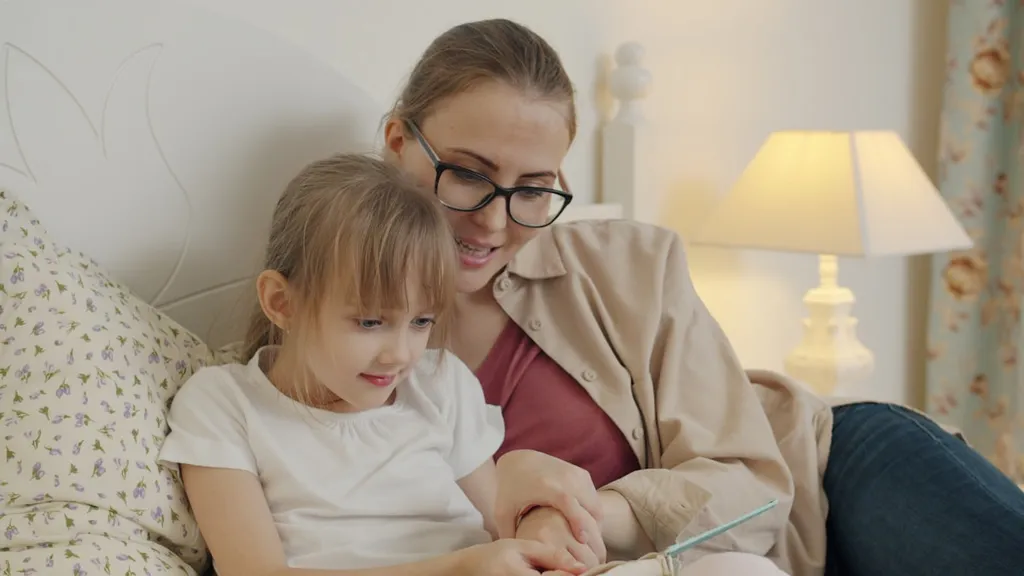
The meltdown at 10 PM on a school night is a co-parenting rite of passage. Your kid got home from the other house an hour later than usual, had a snack that turned into dinner, and is now wired at a time when they’d normally be asleep. None of this is anyone’s fault. But it happens often enough that it’s worth building some structure around.
Research from pediatric sleep studies consistently shows that children with regular bedtime routines fall asleep faster, wake up less often, and have fewer behavioral problems during the day. A 2021 study found that for each night a bedtime routine was implemented consistently, toddlers gained roughly five additional minutes of sleep — small per night, but significant over weeks. Older kids benefit too, though the mechanisms look different: it’s less about bath-book-bed sequences and more about regulating cortisol and screen cutoffs.
The harder question is what any of that means when your child has two homes.
You Can Only Control Your Home
This is the most important thing to internalize, and the most frustrating: you cannot dictate what happens at the other house. If your co-parent lets the kids stay up until midnight on weekends, you can mention it once, document it if it’s affecting the kids, and leave it there. Trying to enforce a uniform bedtime across two households through repeated argument or court filings is expensive and usually unsuccessful.
What you can control is your own home’s consistency. And that matters more than you might think. Kids are more adaptable than adults give them credit for. They can hold different rules for different environments — strict at school, relaxed at grandma’s — without falling apart. Two different but predictable households is manageable. Two inconsistent, unpredictable households is where sleep problems compound.
So build the routine you believe in, hold it consistently, and let that be enough.
The Basic Architecture of a Working Bedtime Routine
A bedtime routine doesn’t need to be elaborate. It needs to be predictable. Kids’ brains key off sequence. When the same things happen in the same order, their bodies start preparing for sleep before the lights go off.
A functional routine for elementary-age kids runs about 30-45 minutes and typically includes:
- A clear “start” signal (bath, pajamas, or turning off screens)
- Quiet activity (reading, light conversation about the day)
- A fixed bedtime, the same or within 30 minutes of the same time each night
- A fixed wake-up time, which is actually more important for sleep regulation than bedtime
The wake-up time anchor matters. Sleep research is clear that wake time drives the whole rhythm. If you let weekends drift two hours later, the “social jet lag” carries into Monday morning. Even when your child is at the other house Thursday through Sunday, holding a consistent wake time when they’re with you keeps things from derailing completely.
The Comfort Object Problem
Something that trips up a lot of co-parents early on: the stuffed animal or special blanket lives at one house. The child needs it to sleep. The other parent calls asking you to drive it over at 9 PM.
The fix is duplicates. Not counterfeits — kids know the difference, especially young ones — but an acknowledged second version. “This is the elephant that lives at Dad’s house.” Many children accept this framing, especially if the second object is introduced early, before sleep is already disrupted.
For older kids, the equivalent is having their bedtime playlist, their reading app, their charger all present at both houses. The transition between homes shouldn’t mean re-sourcing everything they need to wind down.
When the Routines Are Very Different
If bedtime at the other house is genuinely chaotic and your child is showing up tired, irritable, and struggling to readjust, there are a few practical moves.
First, build in a recovery buffer when your child returns. A low-key, predictable first evening — quiet dinner, earlier bedtime than usual, low stimulation — helps reset faster than trying to dive straight into normal activities.
Second, if you can communicate with your co-parent about bedtimes at all, keep the ask specific and small. “Can we both try to have them in bed by 8:30 on school nights?” is a cleaner request than a general appeal to consistency. Specific requests are easier to agree to. General requests about parenting style tend to start arguments.
Third, talk to your child’s pediatrician if the sleep disruption is sustained. A pediatrician’s recommendation carries weight that a parent’s request often doesn’t. If the doctor puts something in writing about sleep needs for your child’s age and development, that’s a conversation your co-parent is more likely to take seriously.
Bedtime and the Adjustment Window
Children take time to readjust after switching homes. Kids often show increased clinginess, resistance, or hyperactivity in the first few hours after a custody transition — not because they’re distressed about the change long-term, but because transition itself is an activation event.
This means the night of a transition is often the hardest night for sleep. Plan for it. Keep that first evening slower and lower-stimulation. If your child tends to arrive wired, build in 30 minutes of decompression before starting the bedtime routine rather than pushing straight to bed.
It also means that one bad sleep night after a handoff isn’t a crisis or evidence that the other home is doing something wrong. It’s just the transition window. When the disruption extends beyond a night or two every time, that’s worth paying attention to.
When Kids Work the System
Kids figure out pretty quickly that two homes mean two sets of rules, and some of them will use it. “At Mom’s house I can stay up until 10” is a classic opener. Maybe it’s true. Maybe it’s a negotiation tactic.
The move here is simple: you hold your rule, you don’t argue about the other house. “At this house, lights out at 8:30. I know it’s different there, and that’s fine. Here, that’s how it works.” No editorializing about your co-parent’s choices. No getting drawn into a negotiation where you end up extending bedtime to avoid a standoff.
Kids respect consistency more than they let on. Even kids who push hard against a rule do better, long-term, in a house that holds it.
Two homes running completely different bedtime schedules isn’t ideal, but it’s common. If you can agree on anything with your co-parent, bedtime is a reasonable place to start — the stakes are clear (sleep affects school performance, mood, and health) and the ask is concrete. If you can’t agree, build a good routine in your own home, hold it consistently, and trust that predictability within one household still does real work.